Turning The Tide: A New Wave of Climate Justice Through 40 Landmark Cases
Over the past decade, climate litigation has evolved from a niche legal strategy into one of the most powerful forces shaping global climate action. Around the world, activists, communities, and environmental organisations have turned to the courts to challenge governments and corporations, demanding accountability in the face of a climate crisis which is reaching breaking point.
The results have been extraordinary.
What began as a handful of pioneering cases has become a global movement. Courtrooms have emerged as critical arenas in the fight for climate justice, delivering decisions that are influencing public policy, corporate behaviour, and the future of environmental governance. Landmark judgments have compelled governments and corporations to strengthen climate commitments, challenging damaging corporate conduct and protecting vulnerable communities. Slowly but surely, climate litigation is redefining how the law responds to environmental harm. It has become a global movement – one with profound implications for the rights of people and planet.
40 cases. 34 countries. 10 years. 1 shared fight for the future of our planet.
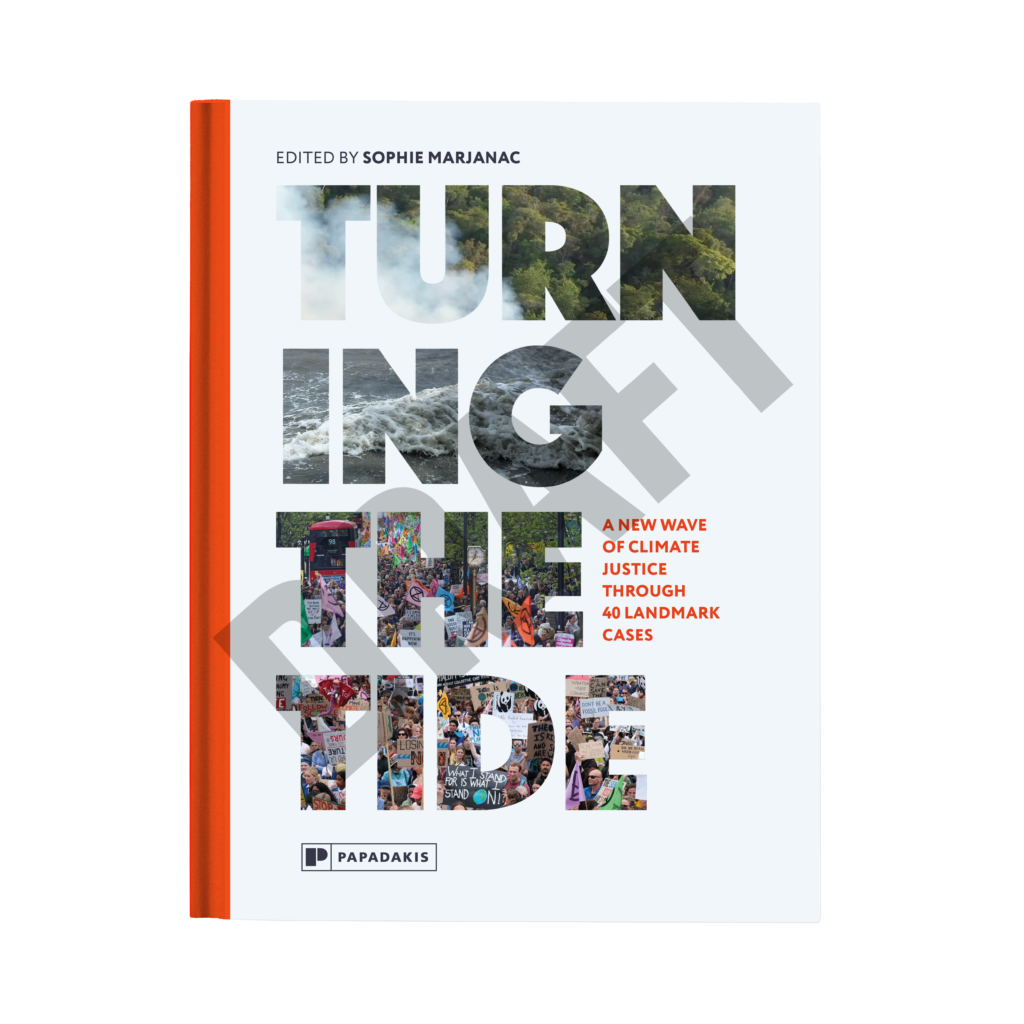
We are beyond proud to announce Turning The Tide – a landmark new publication produced in collaboration with ClientEarth that chronicles this remarkable transformation through 40 of the most influential climate litigation cases of the modern era.
Edited by leading climate litigator, Sophie Marjanac, Turning The Tide is the first major visual history of the climate litigation movement. This book brings you behind the scenes of the legal challenges that have helped redefine accountability in the age of climate change to the heart of the stories of the people fighting for our planet, and what it is they are fighting to protect.
The power of partnership
This publication is made possible by ClientEarth, whose work has helped establish climate litigation as one of the most effective tools in the fight for global action on climate change.
Founded in 2008, ClientEarth has been at the forefront of a legal revolution in environmental protection. Working across borders, sectors, and legal systems, its lawyers and policy experts use the law to hold governments and corporations accountable for climate change, nature loss, and pollution. Through strategic litigation, policy reform, and legal advocacy, ClientEarth has helped transform environmental law from a specialist discipline into a powerful force for systemic change. Many of the landmark cases featured in Turning The Tide reflect the movement that organisations such as ClientEarth have helped to build – one in which courts have become a vital arena in the fight for climate justice.
A definitive record of a transformative decade
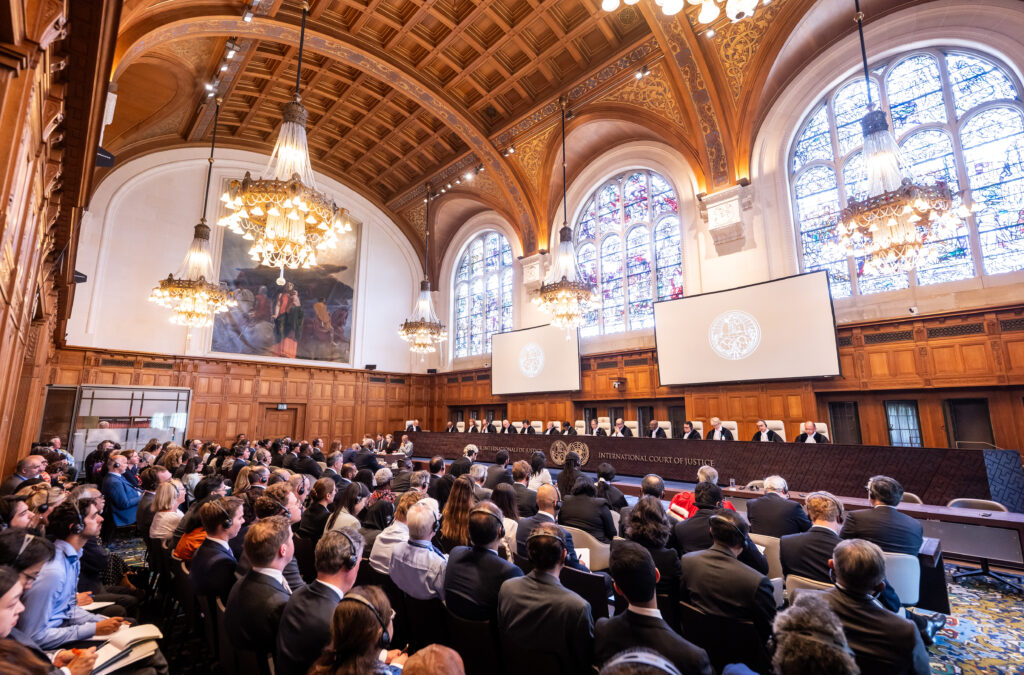
Photograph: UN Photo/ICJ-CIJ/Frank van Beek. Courtesy of the ICJ. All rights reserved.
Climate litigation is no longer a peripheral phenomenon. It has become one of the defining forces in global climate action, with courts increasingly asked to address questions once considered the sole domain of governments and industry.
From the groundbreaking Urgenda decision in the Netherlands to Indigenous land rights victories, corporate accountability lawsuits, and youth-led actions that have captured international attention, these cases have fundamentally altered the landscape of climate justice.
Yet while many of these cases have attracted international attention, the wider story of the movement itself has rarely been documented in a comprehensive and accessible way. Turning The Tide brings together 40 landmark cases that collectively tell the story of climate litigation’s extraordinary rise. Together, they reveal how legal action has emerged as one of the most effective tools available to those seeking meaningful protection for the planet we call home.
The human stories behind the judgments
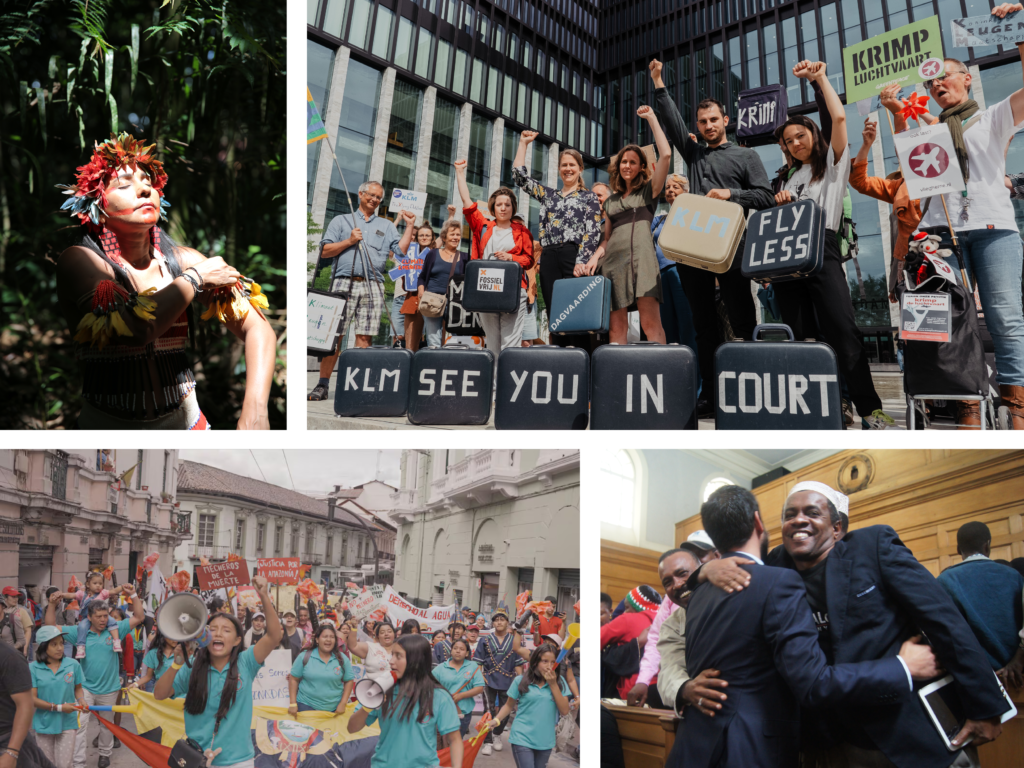
Most legal reference works focus exclusively on legal reasoning and judicial outcomes. Turning The Tide takes a different approach. Alongside expert legal analysis, our book presents a powerful visual narrative that reveals the people, communities, and landscapes behind the cases. It captures not only monumental legal decisions, but the people too – because behind every landmark judgment are individuals whose determination made change possible.
Readers will encounter lawyers pursuing seemingly impossible legal arguments against powerful interests. They will meet Indigenous communities defending their lands and cultures, and hear the voices of young people demanding a liveable future. They will witness the resilience of communities confronting environmental destruction and climate-related harm. At the same time, the book documents the places at the centre of these struggles – forests, coastlines, rivers, communities, and ecosystems increasingly threatened by climate change and environmental destruction.
These are stories of courage, persistence, and collective action.
Turning The Tide reminds us that climate litigation is not simply about legal precedent. It is about people asserting their rights, protecting what they value, and demanding accountability when existing systems fail to respond. Through powerful photography and first-hand perspectives, this book places these human stories at the centre of the narrative.
What we are fighting for

Climate litigation is ultimately about more than laws and courtrooms. It is about the places that communities depend upon and the ecosystems that sustain life. Throughout the book, striking photography documents both the beauty of the environments being protected and the devastating consequences of environmental destruction and climate change. Forests threatened by extraction, coastlines vulnerable to rising seas, communities facing pollution, and landscapes under increasing pressure all become part of the story.
Each chapter explores a pivotal case that has helped shape climate litigation as we know it today. Together, these 40 cases reveal a remarkable shift in how societies understand responsibility for climate harm. They demonstrate how legal systems are increasingly being called upon to address issues ranging from emissions reductions and corporate accountability to human rights and biodiversity protection.
The story is still being written
As climate litigation continues to evolve, the need for authoritative resources has never been greater.
Turning The Tide has been designed as both a lasting reference work and an accessible introduction to a rapidly developing field. For academics and researchers, it provides a comprehensive overview of some of the most influential climate cases of the last decade. For students, it offers an engaging and accessible pathway into climate law and environmental governance. For decision- and policymakers, it provides insight into the growing influence of courts on climate action and public policy. For lawyers, campaigners, and environmental organisations, it offers a valuable record of the strategies, innovations, and precedents that continue to shape the movement today. At the same time, its visual approach makes Turning The Tide accessible far beyond specialist audiences, bringing these crucial stories to light and opening them to a wider public readership.
The story of climate litigation is far from over. New cases continue to emerge. New legal arguments are being tested. New generations of lawyers, activists, communities, and claimants are stepping forward to confront the defining challenge of our age.
Turning The Tide captures a pivotal chapter in an unfolding story. Part legal history, part visual record, and part testament to the power of collective action, our book documents a movement that has transformed the climate conversation and will continue to shape its future.
Turning The Tide will be available in bookshops from March 2027. Follow along to keep up with the journey!